
How vacation rental search tools work for smarter stays


Finding the right vacation rental feels simple on the surface. You type in your dates, pick a destination, and scroll through photos. But the technology working behind the scenes is far more sophisticated than most travelers realize, and understanding it can genuinely change how well your Captiva Island getaway matches your vision. Vacation rental search platforms use advanced retrieval and ranking systems to connect guests with listings that fit their specific needs, running complex processes in fractions of a second. If you want to find a private beachfront home with a pool and enough room for a multigenerational family, knowing how those systems work puts you in a far better position to find it.
Table of Contents
Key Takeaways
Point | Details |
How search tools work | Vacation rental searches use advanced tech to match your needs with the best available homes. |
Smart filtering is key | Applying focused filters helps you unlock relevant Captiva Island rental choices quickly. |
Machine learning shapes results | Ranking algorithms prioritize homes based on guest preferences, boosting your chance of finding a great match. |
Go beyond page one | Sometimes hidden gems appear deeper in the search—manual review can pay off for luxury travelers. |
Understanding the basics: What happens during a rental search
Most people treat a rental search the way they treat a Google search. Type something in, see what comes back, pick the best-looking option. In reality, every search you run triggers a structured sequence of actions that determine which properties you see and in what order.
The journey your search request takes is both organized and layered. A four-stage process powers most platforms: eligibility filtering, candidate retrieval, machine learning ranking, and user experience guidance. Each stage builds on the one before it, thinning out the field until only the most relevant options remain. The system is constantly working to protect you from irrelevant results, even when you are not actively thinking about it.
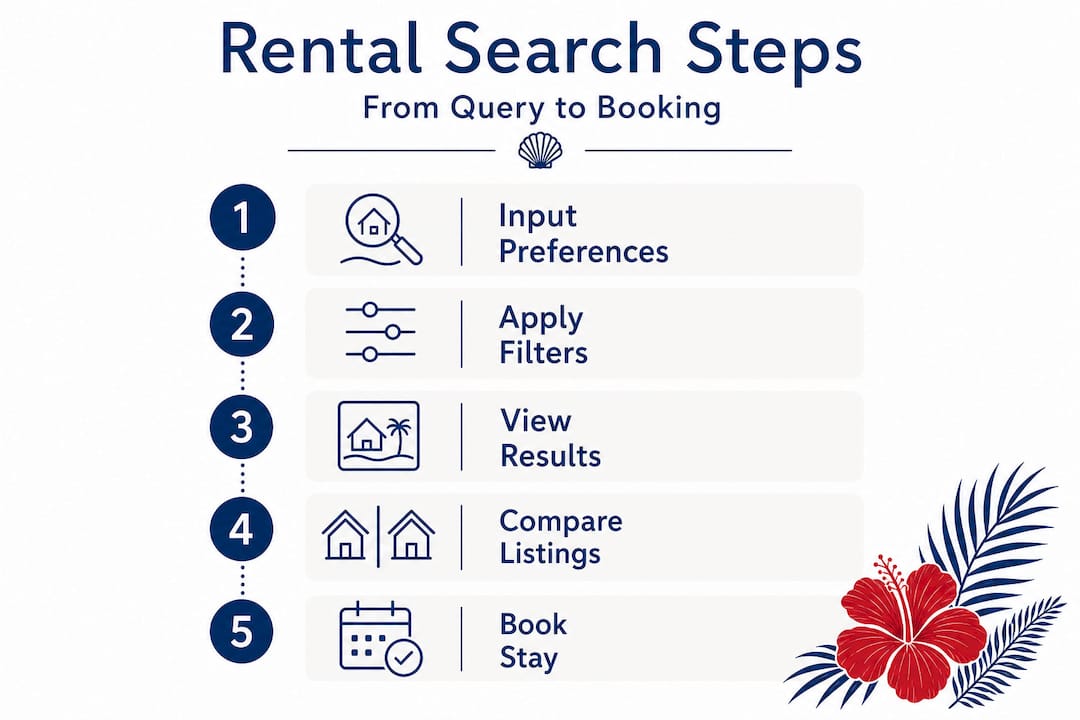
Here is what happens in practical terms when you start a search:
The system first checks your core inputs: location, check-in and check-out dates, and the number of guests.
Properties that cannot accommodate your group or are unavailable during your dates are immediately removed from the running.
The remaining pool of beachfront homes and other properties is then sorted by relevance based on your stated preferences.
A ranking model determines which listings appear at the top of your results.
The user interface guides you gently, showing filters without overwhelming you with too many choices at once.
The goal of all this is to make a complex process feel effortless. You should feel like the search understands what you want, not like you are navigating a database.
Pro Tip: Before you start a search, jot down your non-negotiables, such as a private pool, waterfront access, or a certain number of bedrooms. Entering these early ensures the eligibility filter works in your favor right away, giving you vacation rentals that fit your actual needs rather than just average ones.
Behind the scenes: Filtering and candidate selection
Once you understand the core stages, the filtering and selection phase deserves a closer look. This is where the real narrowing down happens, and it is far more structured than most vacationers imagine.
Think of candidate selection as a funnel. At the top, there might be hundreds of properties on a given island. By the time the system is finished filtering, only a curated set of candidates reaches the ranking stage. Platforms like Airbnb use indexing, search methods, and clustering to retrieve that candidate set quickly before any advanced ranking even begins. Clustering, in simple terms, means grouping similar properties together so the system can scan categories rather than every individual listing from scratch.
Here is how the filtering process typically unfolds in sequence:
Location eligibility: The system confirms which listings exist within the geographic area you requested, whether that is Captiva Island specifically or a broader Southwest Florida region.
Date and availability check: Any property already booked for your selected dates is removed immediately. This step alone can reduce the field dramatically during peak season.
Guest capacity: Properties that cannot sleep your full group are filtered out, protecting you from falling in love with a two-bedroom cottage when you need five bedrooms.
Amenity requirements: If you have filtered for a private pool, pet-friendly spaces, or beachfront access, listings that do not qualify are excluded at this stage.
Candidate pool assembly: What remains after these filters is a candidate set, a group of eligible properties ready for the ranking engine.
The table below shows how filtering reduces the candidate field in a typical luxury rental search scenario:
Filter stage | Properties remaining (example) | What was removed |
Total island inventory | 200 | None yet |
After location filter | 180 | Out-of-area listings |
After date availability | 110 | Already-booked homes |
After guest capacity | 75 | Undersized properties |
After amenity filter | 40 | No-pool or inland homes |
Final candidate set | 40 | Ready for ranking |
Using the rental search filters thoughtfully from the start means the system builds a candidate set that already reflects what truly matters to your group. You are not sorting through noise. You are working with a pre-qualified shortlist.
Pro Tip: If your dates are flexible, try adjusting your check-in or check-out by a day or two. Shifting your timeline can open up premium properties that were unavailable for your original window, especially during shoulder season on Captiva Island.
The power of machine learning: Ranking what matters most
With candidates selected, the next stage is where things get genuinely fascinating. Machine learning takes that shortlist and determines which properties appear first. And the criteria it weighs are more nuanced than most travelers expect.

Machine learning re-ranks candidates based on query context, guest preferences, conversion likelihood, and satisfaction data. In plain language, the system studies patterns across millions of past searches and bookings to predict which listing will make you happiest. It looks at what similar guests chose, how they rated the property afterward, and how well the listing’s features align with your stated preferences.
Ranking factor | Why it matters for luxury Captiva searches |
Location specifics | Beachfront vs. bayfront vs. near-beach carries real weight |
Amenity match | Private pool, outdoor kitchen, or dock availability |
Guest reviews | High ratings signal consistent quality and host reliability |
Property size | Families need sleeping capacity and living space that match |
Booking history | Popular properties during similar dates rank higher |
Image quality | Professional photos signal premium properties |
For luxury searches specifically, certain features carry outsized weight. A private pool is not just a nice-to-have on Captiva Island. It is a defining feature that transforms how families spend their mornings, how couples unwind in the evening, and how the whole property feels at the end of a long beach day. The machine learning model recognizes this and surfaces pool-equipped homes prominently when that filter is active.
The data is clear on this point: travelers who search with specific amenity filters report higher booking satisfaction than those who browse with no filters at all. The ranking system essentially rewards properties that genuinely match stated needs by placing them where they are most likely to be seen and booked.
Browsing Captiva Island rentals with your key preferences selected means you are giving the algorithm everything it needs to prioritize the right homes for your group. The technology works with you, not just for a generic average traveler.
User experience: Making complex tech feel simple
All the technical sophistication in the world means nothing if the interface leaves you frustrated. The best rental search tools are designed to hide their complexity, presenting a calm and intuitive experience that guides you naturally toward your ideal property.
One of the most thoughtful design choices in modern rental search platforms is deliberate filter limitation. Search tools intentionally expose only a limited set of filters to prevent decision paralysis, keeping the experience focused rather than overwhelming. If you had 50 filters to choose from simultaneously, the mental load would undermine the whole purpose of searching. Instead, platforms surface the most impactful filters first, such as dates, guest count, and key amenities.
For families planning a Captiva vacation, this design philosophy is particularly welcome. You are already juggling a lot. Coordinating travel for multiple people across different ages and needs is genuinely complex. A well-designed search tool reduces that friction rather than adding to it.
Here are the interface features that make the biggest difference for luxury beach vacation searches:
Map-based browsing: Seeing where a property sits relative to the beach, restaurants, and marina gives immediate spatial context that a list view cannot provide.
Photo-forward listings: High-quality images allow you to feel the atmosphere of a property before you ever read the description, which is how most luxury travelers actually make decisions.
Saved searches: Returning to a refined search without having to rebuild your filters from scratch saves time and reduces frustration.
Clear availability calendars: Knowing at a glance when your preferred home is open prevents the disappointment of falling in love with a property that is fully booked for your dates.
“The best search experience feels like a knowledgeable local friend is sorting through options on your behalf, quietly removing the ones that would never work and gently surfacing the ones that feel right.”
Good rental search tips from experienced travelers consistently point to the same insight: use the interface the way it was designed. Start with broad filters, review the initial results, then layer in more specific preferences. Fighting the system by applying every possible filter at once often narrows your results so aggressively that genuinely wonderful properties disappear from view.
What most vacationers miss about search tools
Here is a perspective that does not come from the tech itself but from years of helping families and couples find the right home on Captiva Island. The first page of search results is a conversation starter, not a final answer.
Algorithms are extraordinarily good at identifying what most guests want. But you are not most guests. You are a specific family with a specific rhythm, or a couple with particular tastes in privacy and space. The machine learning model optimizes for the average best outcome. Your best outcome might be sitting quietly on page two.
We see this play out regularly. A family searching for a private, lush property with a tropical feel might overlook a spectacular home because it was listed more recently and has fewer reviews than older listings. The algorithm weights booking history and reviews heavily, which makes sense statistically but occasionally buries genuinely exceptional newer properties. Scrolling past the first page is not settling. It is strategy.
There is also a meaningful difference between using filters to narrow results and using them to explore. Try removing one filter at a time to see what opens up. If you have been searching only for beachfront homes, add bayfront properties into your view. Many guests who came to Captiva expecting to need beach-direct access discover that a quiet bayfront home with a dock and a kayak delivers a more personal, peaceful experience than they ever anticipated.
The smartest approach combines algorithmic help with human judgment. Use the filters to handle eligibility and basic matching, then find the right rental by reading the descriptions carefully, studying the floor plans, and reaching out to the people who manage the property. A platform backed by 30 years of local expertise gives you access to something no algorithm can fully replicate: a real person who knows which homes suit which families, which view is worth the premium, and which amenities actually get used.
Find your perfect Captiva Island rental
Now that you understand how search technology works at every stage, from eligibility filtering through machine learning ranking and interface design, you are genuinely better equipped to find a vacation home that feels made for you.
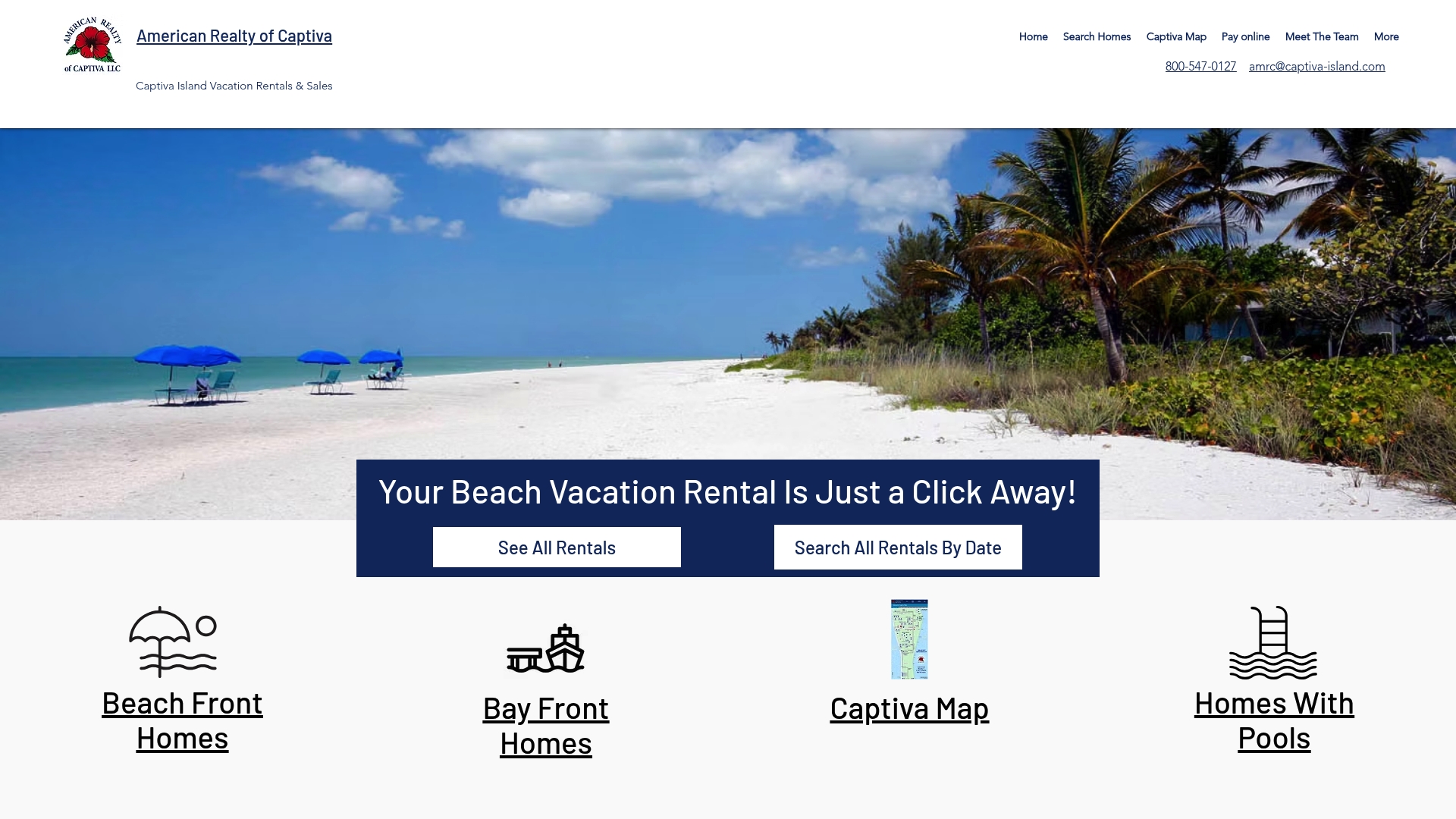
American Realty of Captiva makes that search as smooth and rewarding as the island itself. Our platform is built around your priorities, whether you are a family seeking a sprawling beachfront retreat with a private pool and room for everyone, or a couple looking for a tranquil bayfront escape where the only agenda is enjoying the view. You can browse all Captiva rentals using our preference-driven and map-based search, and if you want guidance from a local expert who genuinely knows these properties, we are here for exactly that. When you are ready to move from browsing to booking, you can also explore beachfront homes and take advantage of direct booking incentives that are available exclusively on our site.
Frequently asked questions
Which search filters matter most for families looking for Captiva Island rentals?
Key filters for families include guest capacity, on-site amenities like pools, proximity to the beach, and flexible dates. Eligibility filtering by amenities and capacity is the first step in most search systems, so setting these filters upfront ensures only truly suitable homes make it to your results.
Why don’t some high-quality vacation rentals show up on the first page?
Algorithms prioritize properties based on many factors, including booking history and conversion rates, sometimes pushing unique or newly listed homes to later pages. Machine learning ranking considers relevance and likelihood of conversion, not just quality alone, which is why scrolling further often reveals hidden gems.
How does machine learning personalize search results for couples versus families?
Search tools adjust rankings in real time based on past bookings, guest preferences, and query context, highlighting properties best suited for your group type. Ranking incorporates query context to surface the most relevant properties, which means a search from a couple traveling light will look meaningfully different from one entered by a family of eight.
Can I trust the search results to always show the best property options for Captiva Island?
While algorithms do a great job of narrowing down options, it is smart to scroll beyond the first results and fine-tune filters for your unique needs. Search tools progressively reveal options, but pairing that with a direct conversation with a local rental expert ensures you find the property that truly fits rather than just the one the algorithm ranked highest.
Recommended
Comments