
Jensen's Marina and Bayfront Rentals Put You Close to Captiva Manatees

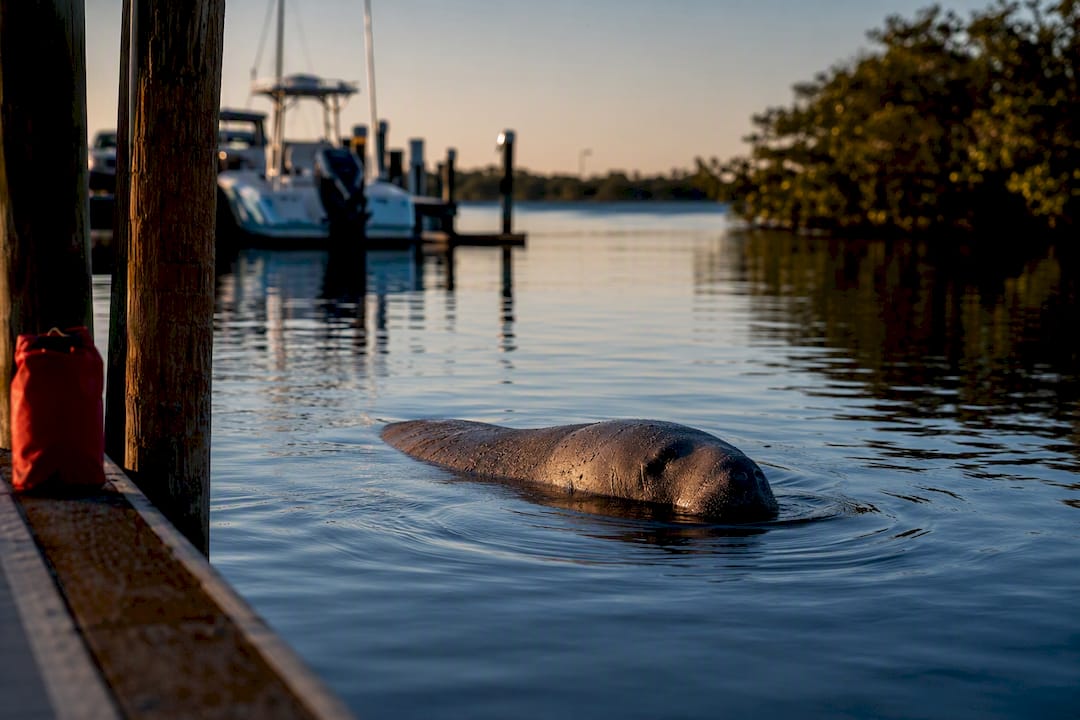
Yes, manatees are a regular sight around Captiva, with sightings possible throughout the year near marinas and warm-water outflows, with higher concentrations during cooler months. Your best odds sit at popular spots like Jensen’s Marina, Tween Waters Inn Marina, and Larry’s Lagoon, especially on a calm early morning. Book a guided eco-tour if you want expert spotters, and always watch from a respectful distance. Local groups like SCCF and the FWC set the rules worth knowing before you go.
TL;DR:
Manatee sightings on Captiva peak from November to March near sheltered marinas and warm-water outflows, with the best chances at Jensen’s Marina and Larry’s Lagoon.
Early mornings before boat traffic or wind start provide the clearest water surface for spotting ripples, snouts, and disturbed seagrass signals.
It is illegal to harass, feed, or touch manatees, and keeping at least 50 feet of distance is required to watch responsibly and avoid fines.
Guided eco-tours increase sighting odds and protect the animals through expert tracking and strict no-harassment policies.
Communicating with local groups like SCCF and the FWC helps report injured or entangled manatees, safeguarding their habitat for future visitors.
Table of Contents
Where to see manatees on Captiva Island
Manatees on Captiva favor calm, shallow water near docks, seawalls, and mangrove edges where seagrass grows thick and boat traffic slows down. A few spots consistently produce sightings, and each one rewards a slightly different approach.
Jensen’s Marina: Walk the docks slowly and scan the water near idle boats. Manatees often surface here to graze or rest in the marina’s calmer basin, and mornings before boat traffic picks up tend to be quietest.
Tween Waters Inn Marina: This spot has a loyal following among locals for good reason. Check the shallows near the fuel dock and the mangrove fringe just beyond it.
Larry’s Lagoon: A protected, low-traffic pocket where manatees linger to feed. It rewards patience more than a quick pass by.
Bayview Fishing Pier: A solid shoreline option with no boat or kayak required. Look toward the pilings, where circular ripples (“manatee footprints”) often give away a resting animal below.
Mangrove channels near South Seas and other marinas: Paddling the calmer backwater channels puts you closer to grazing manatees than shore ever could, though it takes more effort and a bit of navigation sense.
Look for slow circular ripples on otherwise still water, a snout breaking the surface for a breath, or a faint trail of disturbed seagrass. Manatees are not fast or flashy. They reveal themselves in small, quiet signals, which is exactly why the calmest spots produce the best sightings.
When manatees show up around Captiva
Manatees can turn up around Captiva any month of the year, but the Sanibel Captiva Guide notes that gatherings near marinas and warm-water outflows peak from November through March, when cooler Gulf temperatures push them toward these sheltered pockets. During the warmer months, from April through October, Port Sanibel Marina’s write-up points out that manatees spread out into shallow warm waters across the region, which means sightings happen but require a bit more searching.
Time of day matters almost as much as season. Early morning, before wind kicks up and boat wakes churn the water, gives you the clearest surface to read. Slack tide, the brief window between incoming and outgoing water, calms the currents enough that ripples and snout blows become easy to spot.
Cold snaps change the picture fast. When temperatures drop hard, manatees abandon open shallows for freshwater springs and warm discharge areas where the water holds steady, often near 70°F. A sudden warm spell can just as quickly send them wandering back into open water, so flexibility beats a rigid schedule.
How to watch manatees responsibly and legally
Manatees are protected under federal law, and the Marine Mammal Protection Act makes it illegal to touch, feed, or harass them, a rule most reputable local operators build directly into their tours. The Florida Fish and Wildlife Conservation Commission enforces these protections locally and posts speed-zone maps for boaters navigating manatee habitat.
If you’re on the water, follow these steps:
Slow to idle speed or stay within posted no-wake zones the moment you enter known manatee habitat.
Cut your engine near a resting or feeding manatee rather than idling closer for a better look.
Give at least 50 feet of space, more if the animal seems alert to your presence.
Never pursue, corner, or attempt to touch a manatee, even one that approaches your kayak.
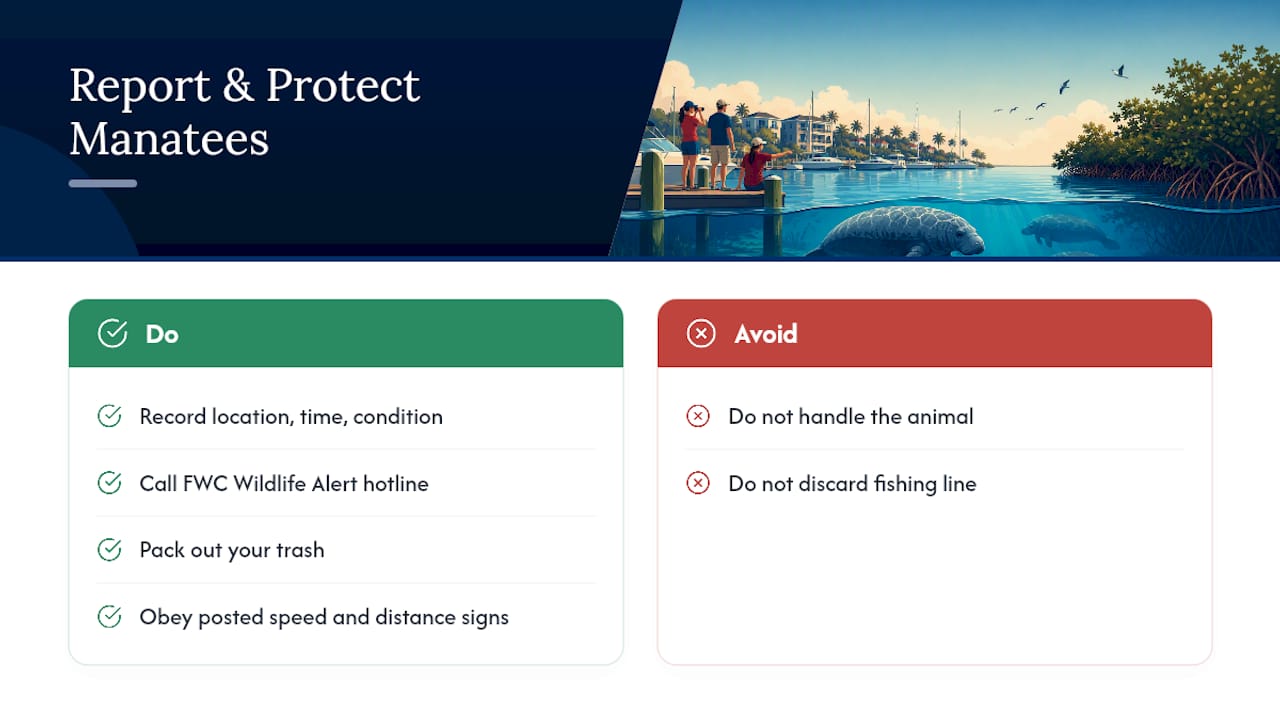
Pack out all fishing line and trash, since discarded gear is one of the leading causes of manatee entanglement, according to conservation guidance from the University of Florida.
From shore or a kayak, the rules are simpler but no less important. Wear a PFD, keep noise down, and resist the urge to paddle straight toward a manatee that surfaces nearby. Let it come to you or move on its own terms.
Pro Tip: Polarized sunglasses cut glare on the water’s surface far better than regular shades, which makes those telltale ripples and snouts easier to spot from a dock or kayak.
Shore, kayak, or guided tour: which fits your trip
Each viewing method has real tradeoffs, and the right one depends on your mobility, budget, and how badly you want a guaranteed sighting.
Shoreline watching costs nothing and works well from Bayview Fishing Pier or marina docks, but your range is limited to what drifts within view.
Kayaking gets you into mangrove channels and lagoons that shore access can’t reach, though it demands paddling stamina and some comfort navigating tidal water.
Guided eco-tours and wildlife cruises raise your odds considerably, since captains track warm-water outflows and seasonal patterns that take locals years to learn. Captiva EcoTours runs small-group boat tours built around responsible viewing, while Captiva Cruises has run wildlife-focused cruises out of the island for decades.
Choose a guided tour if you have limited mobility, a tight visit window, or simply want a naturalist pointing things out you’d otherwise miss. Book an early departure, bring water and sun protection, and expect a reputable operator to keep groups small and enforce a strict no-harassment policy on the water. It’s a similar philosophy to how well-run wildlife encounters work elsewhere, from Florida’s coast to Namibia’s Cape Cross seal colony, where guides prioritize distance and patience over guaranteed close-ups.
Local groups to know and how to report a problem
The Sanibel-Captiva Conservation Foundation runs long-standing monitoring programs across the islands and holds local permits for wildlife protection efforts, making it the most reliable source for on-the-ground updates. The FWC handles enforcement, speed-zone regulations, and statewide manatee policy, working alongside SCCF’s local monitoring.
If you spot an injured, entangled, or dead manatee, note the exact location, time, and the animal’s condition, then contact the FWC’s Wildlife Alert hotline as soon as possible. Don’t attempt to free or handle the animal yourself.
Small visitor habits add up: pack out your trash, cut loose fishing line into a container rather than leaving it in the water, and follow posted speed and distance signs near marinas. Those small choices protect the same habitat that makes Captiva worth visiting in the first place.
A local host’s take on manatee watching from Captiva
Guests staying in bayfront rentals often spot manatees without leaving the dock, especially on quiet mornings when the water sits glassy and still. Others prefer booking a guided trip for the near-guaranteed sighting and the naturalist commentary that comes with it. Either way, respectful viewing keeps the experience good for the next visitor and the animal itself. If manatee watching is a priority, booking earlier in the winter season generally improves your odds.
— Josh
Stay near the water, see more of it
A bayfront or beachfront rental puts you steps from the exact conditions that produce good manatee sightings: calm water, dock access, and an early-morning view before boat traffic picks up. Captiva-island’s full rental listings let you search by location, so you can prioritize homes near marinas or with private dock access where it’s permitted.
If you’re planning around manatee season, look specifically at beachfront homes with easy shoreline access or nearby boat-launch points, and book with enough lead time to lock in a winter stay when sightings tend to cluster. Direct booking here may offer seasonal discounts without a middleman markup. Whatever you choose, keep your distance from any manatee you spot and follow posted marina rules. Start your search on the rentals page and build your trip around the water.
Sources
Recommended
Comments