
Maximize Rental Income From Your Beachfront Property


Maximizing rental income from a beachfront property is defined by three decisions: how you price, where you list, and what your property offers guests. Peak season drives 70% of annual revenue for coastal rentals, which means every mispriced week during that window costs you more than a slow month ever could. Owners who rely on static rates lose up to 45% of potential revenue compared to those using dynamic pricing models. The good news is that the gap between average and excellent coastal rental income comes down to a handful of decisions you can act on right now.
How does seasonal pricing maximize rental income for beachfront property?
Dynamic pricing is the practice of adjusting your nightly rate based on demand signals, booking pace, and time to arrival. For beachfront properties, it is not optional. It is the single most powerful tool you have.
Coastal demand does not move in a straight line. You have a hard peak in summer, a softer shoulder season in spring and fall, and a genuine off-season in winter. But within those broad seasons, there are micro-seasonal spikes: school holidays, local festivals, holiday weekends, and spring break windows. Owners who treat all of june the same as all of july leave money on the table. Understanding peak season timing at the property level is the starting point for any pricing strategy.

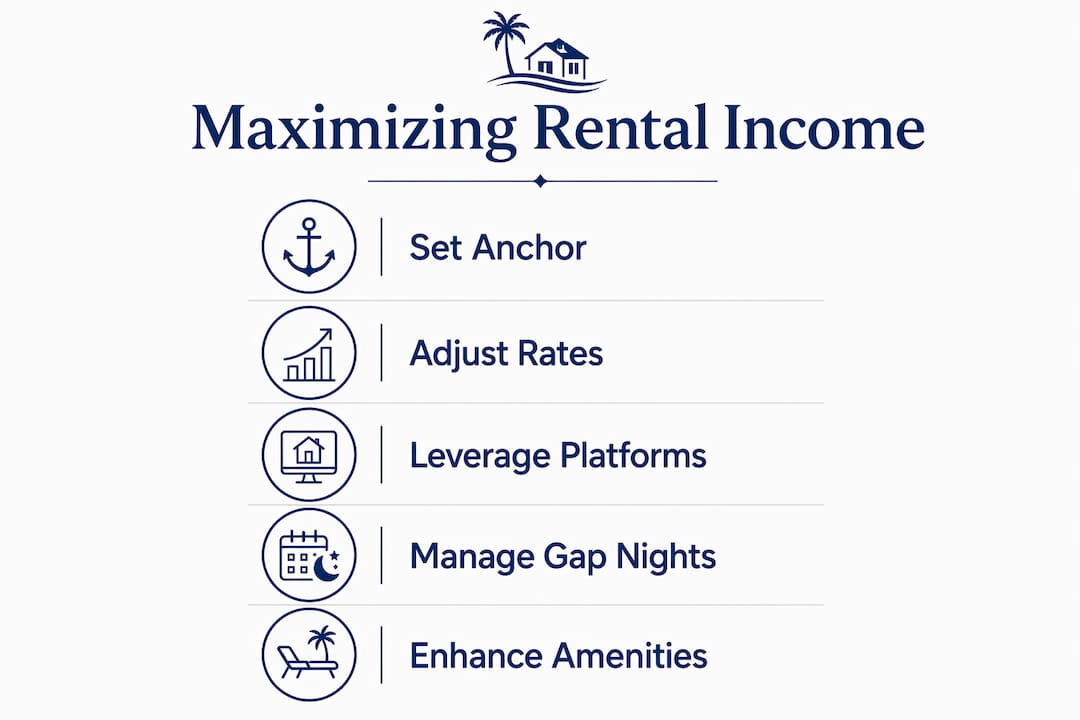
The most effective pricing framework uses three rate thresholds that activate as your booking date approaches. The anchor rate applies 6–8 weeks out, setting your baseline for the period. The escalation rate kicks in 30–14 days before arrival, pushing rates 15–25% above anchor as demand concentrates. The tension rate, applied at 7 days or fewer, lifts prices 30–50% above anchor to capture last-minute guests who have fewer options. This structure rewards early planners with fair pricing and captures premium value from guests who book late.
Pro Tip: Track your seasonal RevPAR (revenue per available rental night) each month. If your RevPAR drops below your anchor rate average, your escalation triggers are firing too late or not at all.
Pricing Threshold | Timing | Rate Adjustment |
Anchor rate | 6–8 weeks before arrival | Baseline market rate |
Escalation rate | 30–14 days before arrival | +15–25% above anchor |
Tension rate | 7 days or fewer | +30–50% above anchor |
Off-season floor | Low-demand periods | Minimum acceptable net rate |
What multi-channel booking strategies maximize occupancy for beachfront rentals?
A single platform listing is a single point of failure. Multi-channel distribution raises summer revenue by 25–40% compared to single-platform reliance. That figure reflects the reality that different guests shop in different places, and no one platform captures all of them.
Each major platform serves a distinct guest profile:
Airbnb attracts early planners and international guests. Families and couples booking 8–12 weeks out tend to start their search here. This platform fills your peak calendar first and gives you the booking lead time to apply escalation pricing.
Booking.com skews toward last-minute European travelers who often book within two weeks of arrival. These guests typically accept higher nightly rates because their options are limited. Listing here fills gaps that Airbnb misses.
Vrbo draws families and groups who want longer stays, often 7–14 nights. Longer stays reduce your turnover costs and improve your net margin per booking.
Direct bookings eliminate commission fees entirely. A returning guest who books directly through your own site or by phone costs you nothing beyond the time it takes to confirm the reservation.
Gap nights are the silent revenue killer in beachfront management. A gap night is an isolated unbooked night between two reservations. Multi-channel reallocation increases last-minute night revenue by 19% compared to single-platform owners, largely because you can push gap inventory to platforms where last-minute demand is strongest.
Pro Tip: Set a minimum stay of two nights on all platforms during peak season, then drop to one night for gap dates only. This fills calendar holes without permanently lowering your minimum stay standards.
Which property features justify premium beachfront rental rates?
Guests pay a premium for beachfront access, but they stay longer and return more often when the property itself earns that rate. High-end coastal amenities like private pools, climate control, laundry machines, and spacious living areas directly justify higher nightly pricing and improve your listing’s search ranking on most platforms.
The features that move the needle most for coastal properties include:
Direct beach access or beachfront position. This is the primary rate driver. Properties with private or semi-private beach access command a measurable premium over those that require a short walk or shared path.
Private pool. Families with children and groups consistently filter for this feature. A pool extends your usable season into shoulder months when the Gulf water temperature drops.
Quality climate control. Florida summers are demanding. Guests who are uncomfortable at 2:00 AM leave poor reviews. A well-maintained HVAC system protects your rating as much as your guests.
In-unit laundry. For stays of five nights or more, laundry access shifts from a convenience to a necessity. Families traveling with young children rank it among their top three requirements.
Interior design that matches the setting. Coastal styling with quality furnishings photographs well and earns better listing click-through rates. A property that looks like the beach it sits on attracts guests who are willing to pay for that experience.
Listing transparency matters as much as the amenities themselves. Guests who find hidden fees for cleaning, parking, or power leave reviews that hurt your future pricing power. Build those costs into your nightly rate or disclose them clearly upfront. Either approach protects your reputation and your revenue.
How can owners manage pricing and bookings to protect rental income?
Operational discipline separates owners who hit their revenue targets from those who wonder where the season went. The weekly booking pickup rate is the most useful single metric for this. It measures how quickly a given week is filling relative to the same period last year or last season. A week filling faster than expected signals underpricing. A week sitting still signals overpricing or a listing quality problem.
Audit your calendar every Monday. Look at the next 90 days. Identify any isolated gap nights and push them to last-minute platforms at a reduced rate. A night at 70% of your target rate beats an empty night every time.
Set a minimum acceptable net rate. Know the floor below which you will not go. Factor in your cleaning costs, platform fees, utilities, and any property management fees before you set that number.
Use local event calendars. Captiva Island and the surrounding Lee County area have predictable demand spikes around art festivals, fishing tournaments, and holiday weekends. Price those dates manually rather than relying on automated tools alone.
Build a direct guest list. After every stay, send a follow-up message with a direct booking offer for their next visit. Guests who return directly cost you nothing in commission and tend to treat the property better because they feel a personal connection to it.
Review your competitor set quarterly. Look at comparable properties in your area, same size, same beach access, similar amenities. If your rates are consistently 20% above theirs with no clear differentiator, your occupancy will suffer. If you are consistently 20% below, you are subsidizing your guests.
Pro Tip: Combining early booking incentives with last-minute price surges captures the full range of guest willingness to pay. Offer a 10% discount for bookings made 90 days out, then apply tension pricing in the final week. Both ends of the booking window become revenue opportunities.
Key Takeaways
Owners who combine dynamic pricing, multi-channel distribution, and guest-centric amenities consistently outperform those who rely on static rates and a single platform.
Point | Details |
Peak season pricing | Peak season drives 70% of revenue; price every week individually, not by month. |
Three-threshold pricing | Use anchor, escalation, and tension rates to capture value at every booking window. |
Multi-channel distribution | Listing across Airbnb, Booking.com, Vrbo, and direct channels raises summer revenue by 25–40%. |
Amenity investment | Private pools, quality climate control, and in-unit laundry justify premium rates and longer stays. |
Weekly calendar audits | Monitor booking pickup rates weekly and fill gap nights before they become lost revenue. |
What I have learned about sustainable beachfront rental income
The owners I have seen sustain strong rental income year after year share one habit: they treat their property like a business, not a passive asset. They check their calendar every week. They adjust prices before demand forces them to, not after a slow month reveals the problem.
The biggest mistake I see is reactive pricing. An owner notices a slow week in october and drops the rate by $50. By then, the guests who would have booked that week at a fair price have already booked somewhere else. Proactive pricing, set weeks in advance based on pickup data and local event calendars, captures those guests before they leave.
Multi-channel distribution still surprises owners who have only ever listed on one platform. The idea that Booking.com fills a different demand window than Airbnb sounds like a small detail. In practice, it can mean the difference between 65% and 85% annual occupancy. That gap, across a full season, is significant income.
The properties that hold their rates best through shoulder season are the ones that invested in amenities guests actually use: pools, good beds, reliable air conditioning, and a kitchen that works. Guests who are comfortable pay more and complain less. That combination protects your reviews, and your reviews protect your pricing power.
If you want to go deeper on off-season pricing tactics that keep income steady between peaks, the math is simpler than most owners expect.
— Josh
Beachfront rentals on Captiva Island, managed with local expertise
Captiva-island, through American Realty of Captiva, has spent over 30 years helping owners and guests connect with the right properties on one of Florida’s most sought-after barrier islands. The team understands the micro-seasonal rhythms of Captiva’s rental market in a way that generic platforms simply cannot replicate.
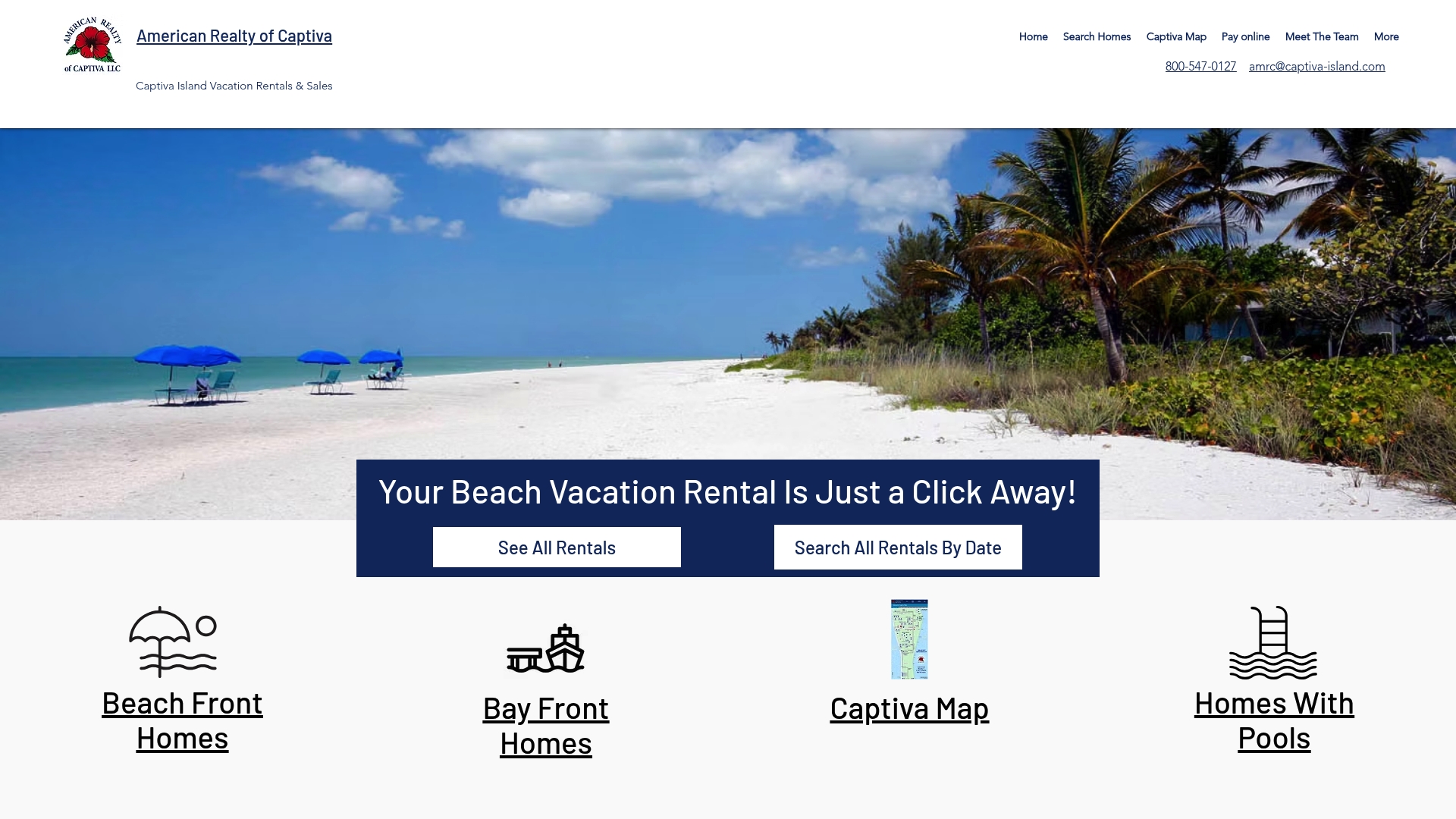
Whether you are evaluating a property’s income potential or looking to place an existing home into a well-managed rental program, the available beachfront rentals on Captiva give you a clear picture of what premium coastal properties look like at their best. Direct booking options reduce commission costs, and local expertise means your pricing reflects actual demand, not national averages. Browse the full rental listings to see the range of properties and the standards guests expect at this level of the market.
FAQ
What is the biggest driver of beachfront rental income?
Peak season pricing is the single largest driver. Peak season accounts for 70% of annual revenue for coastal properties, so every mispriced week during that window has an outsized impact on your annual total.
How does dynamic pricing work for vacation rentals?
Dynamic pricing adjusts your nightly rate based on demand, booking pace, and time to arrival. The three-threshold model uses anchor, escalation, and tension rates to capture maximum value at each stage of the booking window.
Which booking platform is best for beachfront properties?
No single platform is best. Airbnb captures early international bookings, Booking.com fills last-minute gaps, Vrbo attracts families seeking longer stays, and direct bookings eliminate commission fees entirely.
How do I fill gap nights between reservations?
Push isolated gap nights to last-minute demand platforms at a reduced rate. Multi-channel distribution increases last-minute night revenue by 19% compared to single-platform listings, making gap management a direct income opportunity.
What amenities justify higher beachfront rental rates?
Private pools, quality climate control, in-unit laundry, and direct beach access are the features guests filter for most. Properties with these amenities command premium rates and attract longer stays.
Recommended
Comments