
Shelling on Sanibel Island, Florida: Your Beach Guide

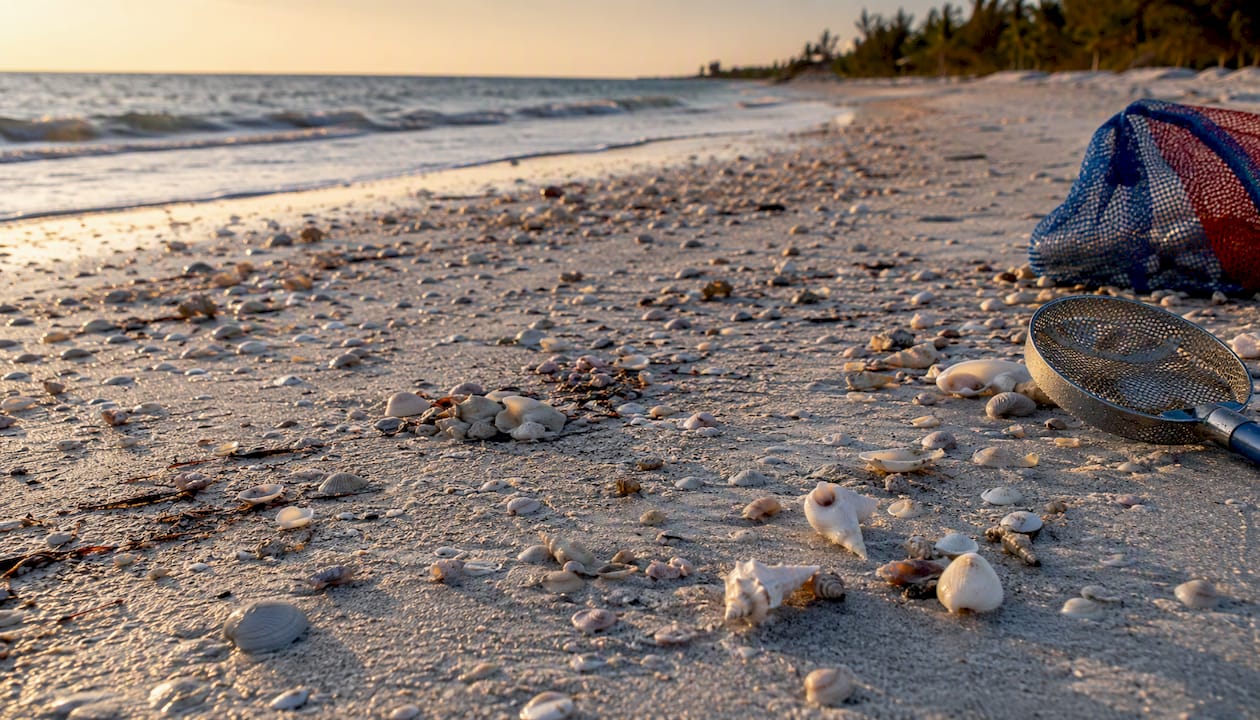
Start at Bowman’s Beach, Lighthouse Beach, or Blind Pass — those are the three best drive-up shelling spots on Sanibel Island, Florida. Arrive about an hour before low tide on a winter morning, ideally the day after a cold front, and you will find the wrack line loaded with fresh material. The one rule that governs everything: Florida law allows you to collect only empty shells. Picking up any shell that still contains a living organism is prohibited under state statute, and the Florida Fish and Wildlife Conservation Commission actively enforces it.
Before you head out, keep these three actions in mind:
Arrive roughly an hour before low tide and work the receding waterline toward the wrack line.
Bring a mesh bag or small scoop, and flip every shell before you pocket it.
If anything moves, has a soft foot, or shows a closed trapdoor, return it to the water immediately.
Table of Contents
Where should you shell on Sanibel?
Local guides consistently name Bowman’s Beach, Lighthouse Beach, and Blind Pass as the island’s top three drive-up shelling destinations, each with a different character worth knowing before you choose.
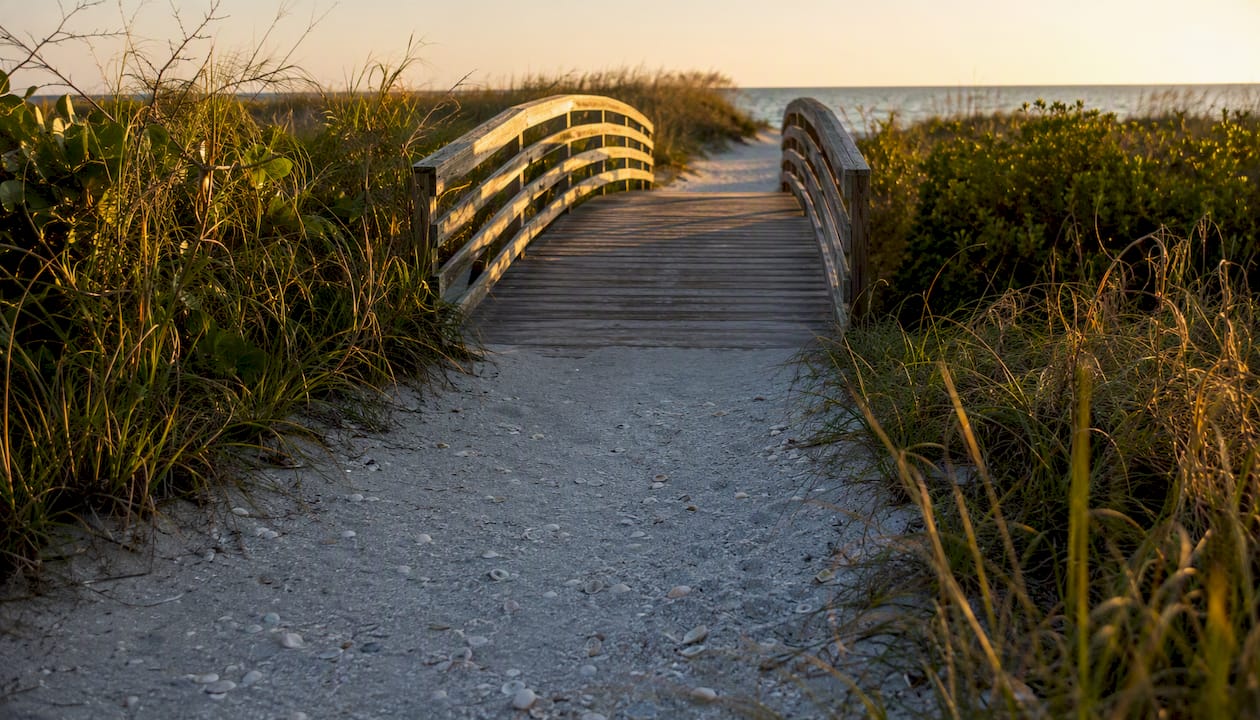
Bowman’s Beach is the serious sheller’s first choice. It sits mid-island, requires a short walk over a footbridge, and that modest barrier keeps crowds lighter than at the lighthouse end. The beach stretches long enough that you can work a full low-tide window without running out of shoreline. Paid parking is enforced here; bring a card or phone for the mobile payment kiosks.
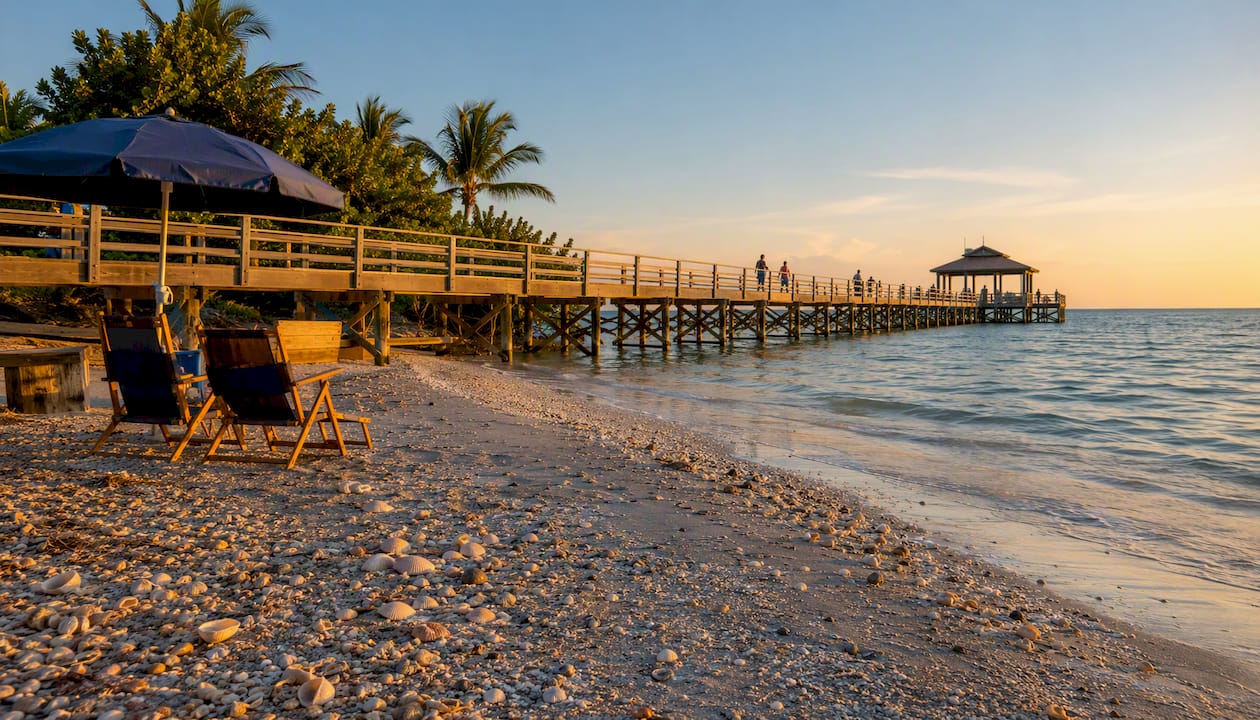
Lighthouse Beach sits at Sanibel’s eastern tip where the Gulf and the bay meet, and that corner location is what makes it so productive for families. Two shorelines feed shells onto one beach, so even a short visit tends to yield a varied haul. It is the gentlest entry point for first-timers and kids, with a pier, restrooms, and easy parking nearby.
Blind Pass, the tidal inlet separating Sanibel from Captiva, concentrates intact and sometimes rarer shells because the current sorts and deposits material in tight bands along the shoreline. The pass itself carries strong currents — treat it as a shoreline search area, not a place to wade in. Check current City of Sanibel notices before visiting, as access and conditions near the pass can shift after storms.
Turner Beach sits on the Captiva side of Blind Pass and often holds the same concentrated deposits with slightly less foot traffic. For a quieter Captiva experience, the Captiva Island shelling guide covers additional spots along the island’s Gulf shoreline worth exploring.
Beach | Best for | Tide timing | Parking note | Target shells |
Bowman’s Beach | Serious collectors, long walks | 1 hr before low tide | Paid, enforced; mobile pay | Cockles, whelks, olives, tulips |
Lighthouse Beach | Families, first-timers | 1 hr before low tide | Paid, pier lot nearby | Mixed Gulf/bay species, coquinas |
Blind Pass (Sanibel side) | Rarities, intact specimens | At or just after low tide | Limited; arrive early | Fighting conchs, lion’s paw, Junonia |
Turner Beach (Captiva side) | Quieter finds, intact shells | At or just after low tide | Small lot, fills fast | Whelks, intact bivalves |
When is the best time to go shelling on Sanibel?
Low tide is the single most important variable. Arriving about an hour before low tide lets you walk the wet sand as the water recedes, exposing fresh material before other collectors arrive. The window from low tide to roughly 45 minutes after is the most productive stretch of any shelling outing.
Season matters almost as much as tide. Winter months from December through March consistently deliver the freshest and most varied shell loads. Cold fronts push Gulf currents in ways that churn offshore shell beds and deposit new material overnight. The morning after a cold front passes is, by most experienced shellers’ accounts, the single best day of the year to be on the beach at sunrise.
For tide planning, consult the NOAA tide tables for the Tarpon Bay station, which gives the most accurate low-tide times for Sanibel’s Gulf shoreline. When a low tide falls within an hour of sunrise, that combination is worth setting an alarm for.
Check NOAA tide tables the evening before your outing
Target a low tide that falls between 6:00 AM and 9:00 AM for the best light and least competition
December through March offers the most productive seasonal window
The morning after a cold front is the premium shelling opportunity of any winter trip
What are the rules for shelling on Sanibel?
The law is straightforward: you may collect empty shells only. Florida Rule 68B-26.004 prohibits collecting or possessing shells that contain living organisms within the regulated area, and Lee County enforces this at the beach level. That means no live mollusks, no live sand dollars, no live sea stars, and no live urchins — regardless of how beautiful the specimen looks.
The FWC’s guidance on inspection is practical: if the shell shows movement, has a soft foot visible, or has a closed operculum (the trapdoor), it is occupied. Return it to the water, ideally in the same spot you found it.
Within J.N. “Ding” Darling National Wildlife Refuge, restrictions go further. Collection of any natural material, including shells, is prohibited inside refuge boundaries, and penalties for violations are steep. The refuge covers a significant portion of Sanibel’s interior and some shoreline areas, so knowing where the boundary sits matters.
Practical do’s and don’ts:
Flip every shell and wait a few seconds before deciding to keep it
Leave any shell occupied by a hermit crab, even if the shell itself is technically empty
Do not dig in dunes or disturb beach vegetation to find buried shells
Avoid bulk removal — taking large quantities depletes local resources and draws enforcement attention
Check posted signage at each beach access point for any temporary collection restrictions
How do you shell effectively? Technique and gear
The technique locals call the “Sanibel Stoop” is exactly what it sounds like: a slow, bent-over shuffle along the wet sand and wrack line, scanning just ahead of your feet. It looks unhurried, but the pace is deliberate. You are reading the sand, not just walking it.
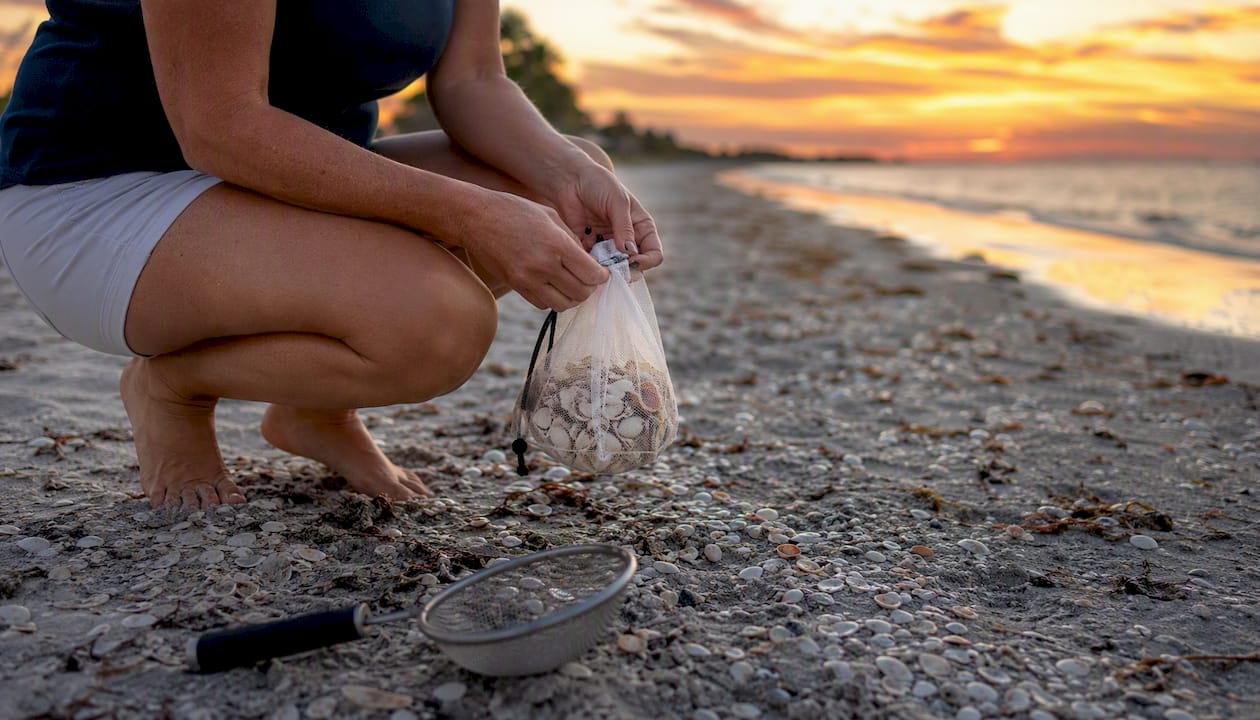
Work the wrack line first. That band of debris left by the receding tide is where the best shells concentrate. Then move to the wet sand closer to the water’s edge for fresher, cleaner finds. A small mesh bag keeps sand draining as you collect, and a handheld sand sifter lets you recover tiny coquinas and olive shells that would otherwise slip through your fingers.
Pro Tip: Bring a red-light headlamp for pre-dawn starts. Red light preserves your night vision, lets you spot shells without startling shorebirds, and signals to other early arrivals that you are a serious collector rather than a casual walker.
Gear checklist:
Mesh or net bag (shells drain, bag stays light)
Small scoop or sand sifter for tiny species
Water shoes (shells and debris underfoot)
Sun protection (hat, sunscreen, UV shirt)
Rigid container or padded bag for fragile or rare finds
Red-light headlamp for early starts
Safety note: Blind Pass currents are genuinely strong. Stay on the shoreline and do not wade into the channel. After storms, beaches can hold sharp debris mixed into the wrack — water shoes are not optional in those conditions.
What shells will you actually find on Sanibel?
Expect to fill your bag with the common species and occasionally encounter something that stops you mid-stride. Common finds include lightning whelks, fighting conchs, cockles, coquinas, olive shells, tulip shells, and sundials. These appear on nearly every low-tide walk and give you plenty to sort through back at the rental.
The lightning whelk is worth knowing by sight: it is one of the few left-handed shells in the world, meaning its spiral opens to the left when you hold the tip pointing up. That detail alone makes it a crowd favorite for identification.
Rarities take patience. The Junonia, a spotted, cylindrical shell roughly the size of a large thumb, is Sanibel’s most celebrated find. Local papers still run photos of visitors who find one. The Scotch Bonnet, Florida’s state shell, turns up occasionally at Blind Pass and Bowman’s. The Lion’s Paw scallop, with its dramatic ridged fan shape, is another prize worth knowing.
Common species to expect:
Lightning whelk (left-handed spiral, tan to gray)
Fighting conch (spiky lip, orange interior)
Cockles (ribbed bivalves, often paired)
Coquinas (tiny, colorful, found in wet sand)
Olive shells (smooth, cylindrical, polished look)
Tulip shells (elongated, often with brown banding)
Rare finds worth photographing:
Junonia (spotted, cylindrical, highly prized)
Scotch Bonnet (rounded, banded, Florida’s state shell)
Lion’s Paw scallop (large, ridged, deep orange or red)
For species identification, the Bailey-Matthews National Shell Museum’s shell guide is the most authoritative free resource available and covers every species you are likely to encounter on Sanibel.
Parking, access, and arrival logistics
Most public beach lots on Sanibel use paid, enforced parking with mobile payment systems. City-managed lots at Bowman’s, Lighthouse, and Blind Pass all require payment, and citations are issued for non-payment or parking in restricted zones. Bring a smartphone or a card; cash-only payment is not reliably available.
Bowman’s Beach lot fills by mid-morning on winter weekends. Lighthouse Beach has more capacity but still fills during peak season. Blind Pass has a smaller lot that goes quickly on good shelling mornings. Arriving before 7:30 AM on a low-tide day solves most parking problems and puts you on the beach before the crowds.
Check the City of Sanibel park pages for temporary closures or post-storm access changes before you travel
Disabled-permit holders should confirm current exemptions on the city site, as rules can be updated
Bowman’s requires a short walk over a footbridge from the lot to the beach
Lighthouse Beach has the most accessible path from parking to shoreline
Where can you find guided shelling tours and expert resources?
The Bailey-Matthews National Shell Museum is North America’s only museum dedicated entirely to shells, and it sits on Sanibel. Beyond the exhibits, it offers guided beach walks led by naturalists who can identify species on the spot and explain what conditions produced that day’s haul. For anyone serious about learning to identify shells, a museum-guided walk is worth scheduling before or after your independent beach time.
For boat-based shelling, Sand Dollar Shelling & Boat Tours operates guided trips to shell-rich sandbars and islands that are inaccessible by foot. Boat tours reach areas where shells accumulate undisturbed, and guides know which sandbars are producing on any given tide. Booking in advance during the December–March season is advisable.
Useful resources to bookmark:
What should you know about post-storm shelling conditions?
A storm or strong cold front often improves shelling by stirring offshore shell beds and pushing new material onto the beach. The morning after is genuinely one of the best times to be out. That said, the same event that deposits fresh shells can also leave hazardous debris, shift access points, and temporarily close parking areas or boardwalks.
Before you travel after any significant weather event, run through this checklist:
Check the City of Sanibel park pages for beach closures or access changes.
Review the NOAA marine forecast for any lingering hazardous surf or current warnings.
Search recent local condition reports or social media from Sanibel-based accounts for on-the-ground updates.
Do not treat severe weather as a shelling opportunity while conditions are still active.
Pro Tip: Pack a small hand broom and a pair of light gloves when heading out after a storm. Heavy wrack lines can hide sharp debris, and a broom lets you sort through material without cutting your hands.
Once you are on the beach, watch for posted hazard or recovery signage at access points. Respect any marked areas where restoration or cleanup work is ongoing, and be mindful of wildlife that may have been displaced by the storm onto the upper beach.
Key Takeaways
Sanibel Island’s east-west orientation and 250+ shell species make it the most productive shelling destination on Florida’s Gulf Coast, and arriving before low tide on a winter morning is the single most effective way to maximize your haul.
Point | Details |
Best beaches | Bowman’s Beach, Lighthouse Beach, and Blind Pass are the top three drive-up spots, each suited to different goals. |
Timing | Arrive about an hour before low tide; December through March and the morning after a cold front are peak windows. |
Legal rule | Florida law permits empty shells only — no live mollusks, sand dollars, sea stars, or urchins, enforced by the FWC. |
Gear and technique | Use the Sanibel Stoop along the wrack line with a mesh bag, sifter, and water shoes; a red-light headlamp helps for pre-dawn starts. |
Captiva-island base | Staying in a beachfront rental on Captiva puts you steps from Blind Pass and within minutes of every top Sanibel shelling beach. |
A shelling trip is only as good as where you sleep
There is a real difference between driving to Sanibel for a shelling morning and waking up already there. Serious shellers know the best window is often 5:30 AM on a cold-front morning, and that window does not wait for a long commute from the mainland.
For families, a stay near the causeway end of Sanibel gives quick access to Lighthouse Beach without the early-morning scramble. For collectors who want repeated pre-dawn starts at Blind Pass and Bowman’s, a property on Captiva’s Gulf side puts you within a few minutes of both. The Captiva Island beaches guide lays out the geography clearly if you are deciding between island positions.
Parking is one of the quiet friction points of a Sanibel shelling trip. Lots fill fast on good mornings, and a citation before sunrise is a poor start to any day. Staying on Captiva or the western end of Sanibel removes that variable entirely. You walk to the beach, not drive to it.
American Realty of Captiva has matched guests with the right properties on this island for over 30 years. That local depth shows in the details: knowing which homes have outdoor showers for rinsing gear, which have storage for buckets and bags, and which put you closest to the tidal inlets that matter most for shelling.
Plan your Captiva shelling stay with Captiva-island
A Captiva beachfront rental is the most practical base for a shelling-focused trip to this corner of Florida. You get private parking, no lot fees, and the ability to walk out at first light without competing for a space.
Captiva-island’s vacation rental collection includes Gulf-front homes with private pools, fully equipped kitchens for rinsing and sorting your finds, and direct beach access that puts Blind Pass within easy walking distance. Families appreciate the private amenities; serious collectors appreciate the proximity. Bayfront options are also available for travelers who want calm water access alongside Gulf shelling mornings — browse the bayfront homes for properties that offer both.
Browse available dates and check current availability directly at captiva-island.com to secure your preferred week during the December–March peak shelling season.
Authoritative resources for planning your trip
These sources give you the regulatory, logistical, and identification information you need before and during your visit.
Florida Rule 68B-26.004: The state statute governing shell collection; the primary legal reference for what you can and cannot take.
Florida Fish and Wildlife Conservation Commission: Enforcement authority for live-organism protections; useful for understanding inspection requirements and penalties.
Bailey-Matthews National Shell Museum Shell Guide: Free species identification resource and the starting point for booking guided beach walks.
City of Sanibel Shelling Regulations: Official city page covering J.N. “Ding” Darling restrictions, beach access rules, and current notices.
Sand Dollar Shelling & Boat Tours: Vetted local operator for guided boat-based shelling to private sandbars.
Eat Play SWFL Sanibel Shelling Guide: Practical parking, tide, and beach comparison resource for trip planning.
Sanibel Island Explorer Shelling Guide: Local guide covering timing, technique, and cold-front strategy.
This article provides general visitor information. For current regulations, confirm rules with the Florida Fish and Wildlife Conservation Commission or the City of Sanibel before your trip.
What the timing advice gets wrong — and what actually matters
The conventional wisdom says “go at low tide in winter.” That is correct, but it misses the more important variable: which low tide on which morning.
A low tide at 2:00 PM in January is technically optimal by the standard advice. In practice, the beach is crowded, the light is flat, and the best shells were picked up by the people who arrived at 6:30 AM. The real edge is not just low tide — it is low tide at or near sunrise, on the morning after a cold front, during a weekday in January or February. That specific combination is what separates a bag full of cockles from a bag that includes something worth photographing.
The other thing most guides understate is the value of staying on the island rather than day-tripping. Shelling rewards repetition. You learn which stretch of Bowman’s holds the best material on an outgoing tide, which corner of Lighthouse Beach collects the smallest species, and how Blind Pass looks different after two days of south wind versus north wind. None of that knowledge is available on a single day trip from Fort Myers. A week-long stay on Captiva, with early access to the beach every morning, is genuinely a different experience from a day visit — not just more comfortable, but more productive.
Recommended
Comments