
The Role of Rental Platforms in Vacation Planning


Rental platforms are defined as digital marketplaces that consolidate lodging search, booking, guest communication, and trip management into a single environment, making them the central infrastructure of modern vacation planning. The role of rental platform in vacation planning has expanded well beyond simple property listings. Today, platforms like Airbnb, Vrbo, and direct-booking tools such as those offered by American Realty of Captiva shape how travelers discover destinations, compare options, and feel confident before they ever pack a bag. Understanding how these platforms work gives you a real advantage when planning your next trip.
How rental platforms simplify and integrate vacation planning
Rental platforms began as digital listing boards. You searched, you found a property, you booked. That model still exists, but the best platforms have moved far beyond it. Today, platforms integrate lodging with activities and dining in one place, addressing the fragmentation that used to make trip planning feel like managing five browser tabs at once.

Airbnb’s vacation booking expansion is the clearest example of this shift. The platform now allows travelers to book accommodations and local experiences together, reducing the back-and-forth between apps and itinerary spreadsheets. This matters because app fatigue is real. When you have to coordinate a rental booking on one platform, a restaurant reservation on another, and a kayak tour on a third, the planning process becomes its own source of stress rather than excitement.
The practical benefit is a more coherent trip. When your lodging, your activities, and your local recommendations all live in one place, you spend less time managing logistics and more time actually enjoying the destination. Platforms that offer this kind of integration are positioning themselves as trip ecosystems, not just booking engines.
“The rental platform shapes the entire vacation, influencing traveler confidence more than just the lodging choice itself.” — From search to stay
The vacation planning with rental services model also benefits travelers who are visiting destinations they have never seen before. A platform that provides local tips, neighborhood context, and curated activity suggestions reduces the uncertainty that comes with unfamiliar places. That reduction in uncertainty translates directly into a more relaxed, enjoyable trip.
Unified booking reduces app switching and itinerary fragmentation
Local experience bundles help travelers discover activities they would not find independently
Platform-provided neighborhood guides add context that generic travel sites rarely offer
Integrated communication keeps all trip details in one accessible thread
Rental platforms vs. hotels and OTAs: what the data shows
The comparison between rental platforms, traditional hotels, and online travel agencies (OTAs) like Expedia or Booking.com is not just a matter of preference. The data tells a clear story about where travelers are choosing to book and why.
61% of travelers book through rental marketplaces compared to just 12% via OTAs. This gap reflects a fundamental shift in how leisure travelers prioritize flexibility, space, and the feeling of being at home in a destination rather than passing through it. Rental stays also average 6.2 nights compared to 5.5 nights for hotels, which suggests that rental guests are committing to deeper, more immersive experiences.
Booking channel | Average stay length | Market share among leisure travelers |
Rental marketplaces | 6.2 nights | 61% |
Hotels (direct) | 5.5 nights | Majority of remaining share |
OTAs (Expedia, Booking.com) | Varies | 12% |
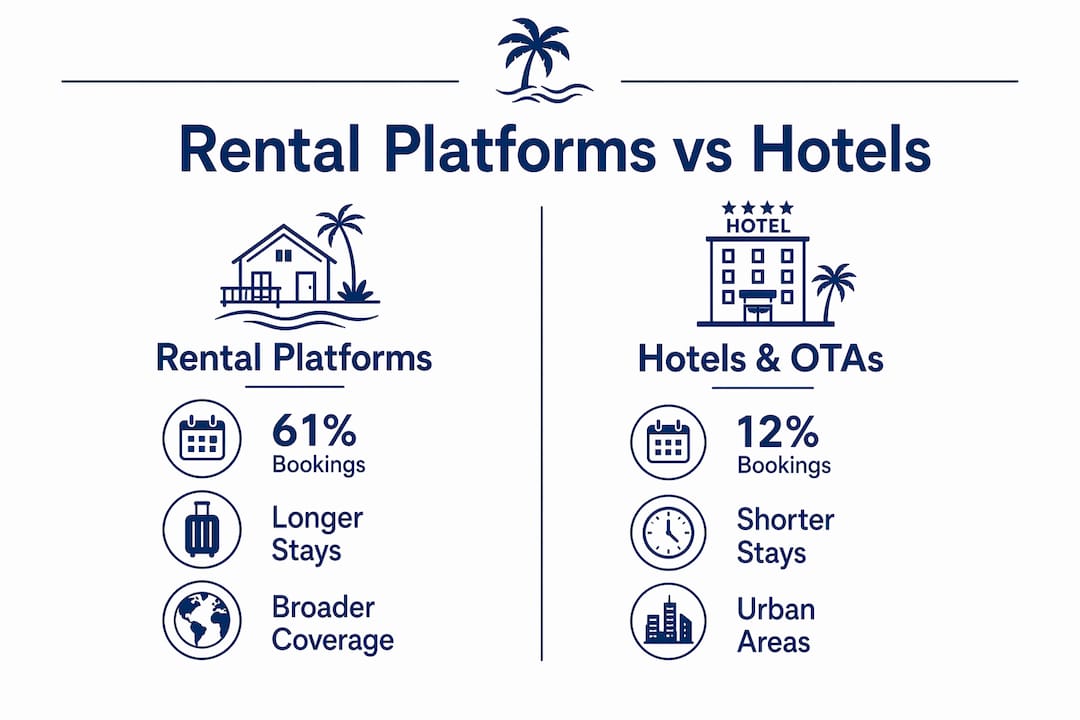
One of the most significant vacation rental platform advantages is coverage. Hotels concentrate in urban centers and resort corridors. Rental platforms reach everywhere else. That coverage gap matters enormously for travelers seeking quieter, more private destinations like Captiva Island, Florida, where the appeal is precisely the absence of high-rise hotel corridors.
Cost is another factor worth examining carefully. Travelers can save approximately 25% by booking rentals directly and avoiding platform service fees. That saving requires doing the comparison work, but for a week-long family trip, the difference can be substantial.
Pro Tip: Always calculate the total cost including all platform fees before comparing a rental to a hotel rate. The nightly rate on a listing page rarely reflects what you will actually pay at checkout.
What technology features make rental platforms worth using
The technology inside modern rental platforms has matured to a point where the guest experience rivals what hotels offer, and in some ways surpasses it. Smart rental systems automate cleaning schedules, generate unique door PIN codes for each reservation, and provide digital guest portals that hold everything from WiFi passwords to local restaurant recommendations.
This automation matters for reliability. When a cleaning schedule syncs automatically with a reservation system, the risk of arriving at an unprepared property drops significantly. When a unique PIN code is generated for your stay and expires at checkout, you have both security and convenience without needing to coordinate a key handoff. These are the kinds of friction points that used to make rentals feel riskier than hotels, and technology has largely resolved them.
Smart locks generate unique entry codes per reservation, removing key exchange logistics
Automated cleaning triggers sync with booking calendars to prepare properties on time
Digital guest portals centralize arrival info, house rules, and local tips in one place
Built-in messaging systems keep all communication documented and accessible
AI tools now assist travelers by summarizing reviews, flagging pricing trends, and narrowing search results based on preferences. This is genuinely useful when you are comparing dozens of listings across a platform. AI can surface patterns in guest reviews that would take hours to read manually. That said, AI summaries are a starting point, not a final answer. You still need to read the actual house rules, check the cancellation policy, and verify that the property layout matches your group’s needs.
Pro Tip: Use AI-powered search filters to create a shortlist of five or six properties, then spend your focused attention reading the full listing and recent reviews for each one. This splits the work efficiently between what technology does well and what human judgment does better.
The smart home features available in premium rentals also extend into the stay itself. Keyless entry, climate control, and entertainment systems that guests can manage from their phones add a layer of comfort that a standard hotel room simply cannot replicate at the same price point.
How to effectively use rental platforms for your next trip
Getting the most from a rental platform requires a deliberate approach. The platform gives you the tools. How you use them determines the quality of your trip.
Start with your non-negotiables. Before you open any platform, write down the three or four features your trip cannot work without. Private pool, beachfront access, pet-friendly, minimum number of bedrooms. These filters eliminate the noise immediately and save you from falling in love with a property that does not actually fit your needs.
Compare total costs, not nightly rates. Platform fees, cleaning fees, and security deposits can add 20 to 30 percent to the displayed price. Always click through to the full checkout summary before making any comparison. For family beach house bookings, this step alone can save hundreds of dollars.
Read the house rules before you book. House rules are not fine print. They define your actual experience. Quiet hours, parking limits, guest caps, and check-in windows all affect how your trip unfolds. A property that looks perfect in photos can create real friction if the rules do not match your group’s habits.
Use the platform’s messaging system for all communication. Keeping your conversation inside the platform protects you if a dispute arises. It also gives you a clear record of any commitments the host made before your arrival.
Ask about direct booking options. Many property managers, including those at Captiva-island, offer direct booking with personalized discounts and repeat-stay perks that platform-mediated bookings do not include. Direct booking portals often provide centralized arrival information including PIN codes, WiFi details, and local tips in one clean document.
How rental platforms are reshaping travel destinations
The impact of rental services on travel extends well beyond individual trips. Rental platforms are actively reshaping which destinations receive visitors and how local economies benefit from tourism.
63% of U.S. Census tracts with short-term rentals have no hotels at all. This means rental platforms are the primary infrastructure enabling tourism in a significant portion of American destinations. Without these platforms, those communities would receive far fewer visitors. Hosts in these hotel-free areas generate nearly 40% of total U.S. earnings on platform rentals, which reflects how much economic activity flows through destinations that traditional hospitality infrastructure has never reached.
The spending patterns of rental guests also differ from hotel guests in ways that benefit local communities. Rental guests spend around $200 per person daily excluding lodging, with roughly half of that spent locally near the rental property. Hotel guests, by contrast, tend to concentrate spending within resort complexes. Rental guests walk to the neighborhood coffee shop, buy groceries at the local market, and eat at restaurants that are not affiliated with a hotel chain.
This dispersal of spending has real consequences for destinations like Captiva Island, where the character of the place depends on small businesses, local guides, and the kind of unhurried atmosphere that a resort corridor would erode. Rental platforms preserve that character by distributing visitors across the community rather than concentrating them in a single property.
Key takeaways
Rental platforms are the most consequential infrastructure in modern vacation planning, shaping traveler confidence, destination access, and local economic outcomes simultaneously.
Point | Details |
Platforms shape the full trip | From search to stay, the platform influences confidence, itinerary, and satisfaction beyond just lodging. |
Rentals dominate leisure booking | 61% of travelers use rental marketplaces, averaging longer stays than hotel guests. |
Direct booking saves money | Booking directly with a property manager can save approximately 25% by removing platform fees. |
Technology closes the reliability gap | Smart locks, automated cleaning, and digital portals make rentals as reliable as hotels. |
Rentals expand destination access | 63% of U.S. Census tracts with rentals have no hotels, making platforms the only tourism infrastructure in many areas. |
Why I think most travelers underestimate the platform itself
People spend hours comparing properties and almost no time comparing platforms. That imbalance is a mistake. In my experience, the platform you choose determines as much about your trip as the property you book. A platform with clear policies, responsive support, and a well-designed guest portal removes anxiety before it starts. A platform that buries its cancellation terms and routes all questions through a chatbot creates stress at exactly the moments when you need clarity.
The technology advances in this space are genuinely impressive. Smart locks, automated portals, and AI-assisted search have removed most of the friction that used to make rentals feel like a gamble compared to a hotel. But the travelers who get the most out of these tools are the ones who use them deliberately. They let AI narrow the field, then they read the actual listings. They check total costs before comparing. They communicate through the platform and keep records.
The shift toward integrated trip planning is also worth paying attention to. Platforms that bundle lodging with local experiences are not just convenient. They are changing how travelers discover destinations. If you have not explored the vacation rental search tools available on modern platforms, you are likely leaving real value on the table. The best trips I have seen planned recently started with a platform and ended with a traveler who felt like they knew the destination before they arrived.
— Josh
Plan your Captiva Island trip with Captiva-island
If you are ready to put these platform advantages to work for a real trip, Captiva-island offers exactly the kind of experience this article describes. American Realty of Captiva has over 30 years of local expertise and a curated collection of beachfront, bayfront, and pool homes on one of Florida’s most tranquil barrier islands.
You can browse the full range of available vacation rentals with filters for location, amenities, and group size. If a private pool is your priority, the homes with pools collection offers options from intimate retreats to large family properties. Direct booking with American Realty of Captiva means personalized service, transparent pricing, and local knowledge that no algorithm can replicate. Captiva Island does not ask much of you. It just asks you to show up.
FAQ
What is the role of a rental platform in vacation planning?
A rental platform consolidates lodging search, booking, guest communication, and trip management in one place. It shapes traveler confidence and itinerary coherence from the first search through the final night of a stay.
How do rental platforms compare to booking through an OTA?
61% of leisure travelers book through rental marketplaces compared to 12% via OTAs, and rental stays average longer. Rental platforms also offer more direct access to property managers and often lower total costs.
Can you save money by booking a rental directly?
Yes. Travelers can save approximately 25% by booking directly with a property manager and avoiding platform service fees. Direct booking portals also often include personalized perks and repeat-stay discounts.
How does technology improve the rental platform experience?
Smart locks, automated cleaning schedules, and digital guest portals replicate hotel-level reliability. AI tools further assist by summarizing reviews and identifying pricing trends to help travelers narrow their options efficiently.
Why do rental platforms matter for destinations without hotels?
63% of U.S. Census tracts with short-term rentals have no hotels, meaning rental platforms are the only tourism infrastructure in many communities. Without them, those destinations would receive far fewer visitors and far less local economic activity.
Recommended
Comments